MARKET ANALYSIS

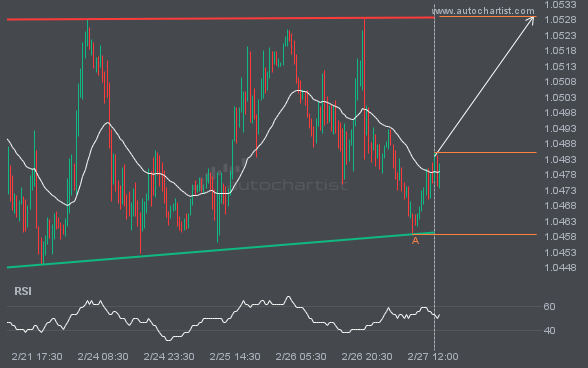
EURUSD is trapped in a Ascending Triangle formation, implying that a breakout is Imminent. This is a great trade-setup for both trend and swing traders. It is now approaching a support line that has been tested in the past. Divergence opportunists may be very optimistic about a possible breakout and this may be the start of a new trend. It may also be that this convergence factor may result in the ideal setup for swing traders that are on the lookout for a possible bounce-back. Whatever happens, an initial move towards 1.0529 is expected in the short term.

FTSE100 is approaching a support line at 10138.6699. If it hits the support line, it may break through this level to continue the bearish trend, or it may return to current levels.

NGC/USD recorded an exceptional 10.43% move over the last 18 hours. Whether you follow trends or look for reversals, this move is hard to ignore.

S&P500 has broken through 6946.9600, which it has tested many times before. We have also seen it retrace from this level. If this new trend persists, S&P500 may be heading towards 6822.6382 within the next 3 days.

The price of XAUUSD is heading toward 4833.3403. Despite the recent breakout through 5066.8848, it may struggle to gain momentum to reach the forecast price and could move back in the other direction. This has happened many times in the past, so watch for a possible bounce back.

A breakout of EURUSD through the support line of a Triangle could signal what’s ahead. If the breakout persists, we may see EURUSD’s price test 1.1842 within the next 2 days.

An emerging Rising Wedge pattern in its final wave has been identified on the FTSE100 4 hour chart. After a strong bearish run, FTSE100 is heading toward the upper triangle trendline, with possible resistance at 10110.2750. If the support holds, the Rising Wedge pattern suggests a rebound toward current levels.

USDJPY is approaching a resistance line at 153.4405. If it hits the resistance line, it may break through this level to continue the bullish trend, or it may return to current levels.